When CEOs get fed up with their middle management
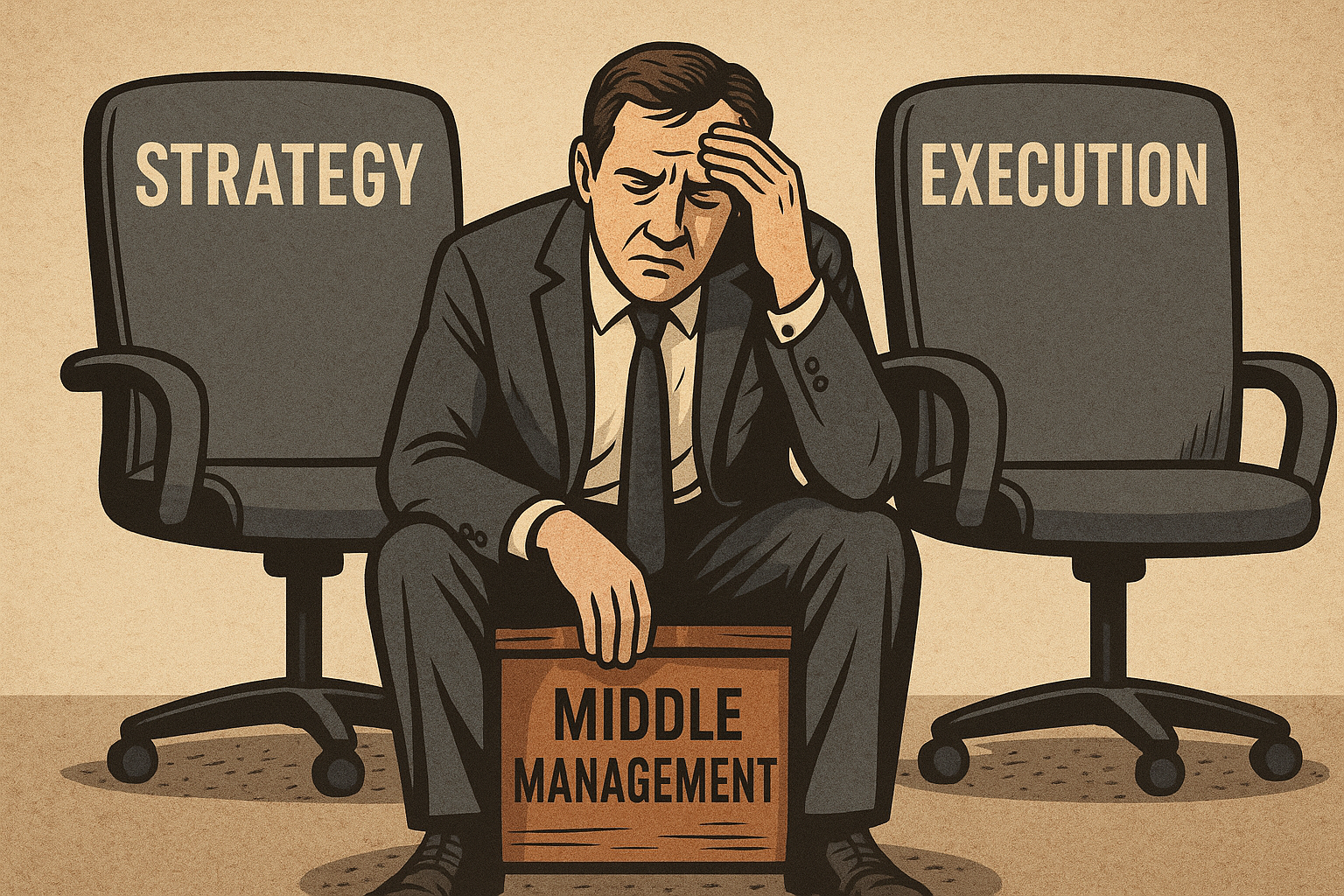
Middle managers are under pressure. They find themselves, so to speak, caught between two stools: the strategic objectives set by senior management and the practical challenges faced by staff on the operational front …
Middle managers are under pressure. They find themselves, so to speak, caught between two stools: the strategic objectives set by senior management and the practical challenges faced by staff on the shop floor. This balancing act is particularly acute during periods of change processes, turnarounds, change management initiatives, corporate transformation and, in particular, M&A activities. ‘At the top’, everyone wants to change everything all the time; ‘at the bottom’, apathy and staff turnover prevail.
The operating environment has also become more challenging. In the past, middle managers could console themselves with perks such as company cars, bonus air miles or exclusive canteens. However, these status symbols have often been scrapped today. The frustration is understandable, but this attitude must not lead to middle managers actively or passively fostering resistance.
Why CEOs are losing patience
But it is not only middle managers who feel worn down – CEOs, too, are becoming increasingly frustrated. This frustration is often directed at a lack of initiative and determination amongst middle management. Many senior managers report feeling as though they are fighting a losing battle. There is frequently a lack of emotional commitment and a clear commitment to change. The attitude that ‘it’s always been this way’ is poison for any change process.
Elon Musk provides a prominent example of consistent action. Following the takeover of Twitter in 2022, he issued an ultimatum to his staff: anyone not prepared to become part of an ‘extremely hardcore’ culture could leave the company with a generous severance package. Musk’s approach may seem radical, but it drives home a key message: in times of upheaval, there is no place for the indecisive – only for determined allies.
Managing emotions, overcoming resistance
The challenges faced by middle management are not only organisational but, above all, emotional in nature. In any workforce undergoing a turnaround, there are different camps: one third who actively go along with the changes, one third who wait and see with uncertainty, and one third who resist out of fear or a lack of understanding. Emotional stagnation amongst middle management can jeopardise the entire turnaround.
The question is: how can middle managers be motivated? CEOs must make it clear why change is necessary, whilst at the same time showing how each individual can contribute to the solution. It is not a question of keeping everyone happy, but of gaining a critical mass of support for the change.
The middle ground is often the wrong path
A common mistake made by many CEOs is to rely on compromise so as not to alienate anyone. Yet this middle ground often leads nowhere. In a crisis situation, clear decisions and an uncompromising prioritisation of corporate objectives are required. Anyone who relies on inclusion and consensus for too long risks bringing the entire process to a standstill.
However, this does not mean that executives should act blindly. It is crucial that they develop an awareness of the dynamics within the company. Some employees have long recognised the urgency of change, whilst others are still living in a comfort zone – or, to put it another way, on another planet! The first step is to identify these groups and address them specifically.
Conclusion: Leadership requires courage and consistency
Dealing with middle management is no easy task. It requires patience, empathy – and sometimes a firm hand. CEOs who wish to realise their visions must be prepared to make difficult decisions.
Leadership is not about pleasing everyone, but about doing the right thing.